
The term “lamiswisfap” has begun to appear in professional and academic discussions to describe a modern, structured approach to adaptive thinking and sustainable performance. These functions have names, though you may not have encountered this term before. However, you will most likely agree that this term is increasingly aligned with global needs. People need systems that support learning, decision-making, and sustained attention under stress. Lamiswisfap answers that demand by offering a clear and practical framework.
This article explains the concepts clearly and will help the reader understand one term, the meaning and workings of the term, and why the term encapsulates the essence of the core principles. It will demonstrate the term’s merits to both the individual and the organization. Here, the author seeks to clarify rather than hype.
Understanding the Core Concept of lamiswisfap
The basic idea captures a plan with a learning, knowing, and acting cycle, where learning occurs through intentional action rather than reactivity. Progress occurs when individuals reflect, realign, and apply their thinking in the moment.
The model has three pillars.
The first is intentional learning. Learning is not a one-time endeavor; it does not end with training or education. Learning occurs through observation, feedback, and experimentation. Every action taken is also a learning point, or data point.
The second pillar is understanding one’s environment. Before taking action, an individual needs to understand the situation. What are the barriers? What are the objectives? Having this understanding will prevent unnecessary actions and avoid bad decisions.
The last pillar is flexible execution. Plans are great, but so is the ability to remain flexible and shift them when the environment changes. A system should not need to be broken in order to shift.
This combination makes the framework practical. It does not rely on rigid rules. It relies on informed judgment supported by structure.
The Origins and Evolution of lamiswisfap
The idea behind this framework did not appear overnight. It evolved from several existing disciplines. Systems thinking, behavioral science, and performance psychology all influenced its development. Early thinkers noticed a common problem. Many methods focused only on planning or only on action. Few connected learning, thinking, and doing in a simple loop. Over time, researchers and practitioners began to integrate these areas.
The result was a unified approach. It treated growth as an ongoing process instead of a one-time event. The name became a label for that integrated mindset. As organizations faced rapid change, the approach gained attention. Teams needed ways to respond quickly without losing direction. The framework offered a balance between structure and freedom.
Key Principles That Define the Framework
Several principles shape how this model works in practice.
Clarity of intent
Every action starts with a clear purpose. People define what they want to achieve and why it matters. This clarity reduces distraction and confusion.
Feedback-driven improvement
Feedback guides progress. It can come from results, peers, or self-reflection. The system treats feedback as information, not judgment.
Small, consistent actions
Progress happens through small steps. Large goals break down into manageable actions. This approach builds momentum and confidence.
Context awareness
Decisions take into account timing, resources, and constraints. What works in one situation may fail in another. Awareness keeps actions relevant.
Continuous alignment
Goals, actions, and values stay aligned. When misalignment occurs, adjustments are made quickly.
These principles work together. They create a stable yet flexible structure for growth.
Practical Applications in Professional Settings
Professions such as management, design, engineering, and leadership use the concept, though it’s often unnamed. In leadership, it comes in the form of decision support. Good leaders take the time to understand a situation before jumping in. They review the results and adjust their approach. This builds a habit of trust and reliability.
In project management, it helps improve the team’s results. The team has goals, works in sprints, and does regular progress reviews. They change their approach based on actual results, not guesses. In personal productivity, it helps individuals concentrate. People set goals, review their performance, and change how they do things. The system helps avoid burnout by encouraging the right level of activity and reflection.
In all these examples, the model focuses on long-term performance rather than short-term results.
How the Framework Supports Learning and Growth
Learning plays a central role in this approach. The system treats every experience as a lesson. People observe outcomes closely. They ask what worked and what failed. They identify patterns over time. This process turns experience into insight. Reflection happens regularly. Short reviews replace long evaluations. These reviews keep learning active and relevant.
Application follows learning. Insights lead to changes in behavior. The loop continues as new actions create new data. This cycle builds expertise naturally. Skills improve through use, not theory alone. Confidence grows with competence. The framework also encourages curiosity. Questions matter more than quick answers. This mindset supports innovation and resilience.
Benefits Compared to Traditional Models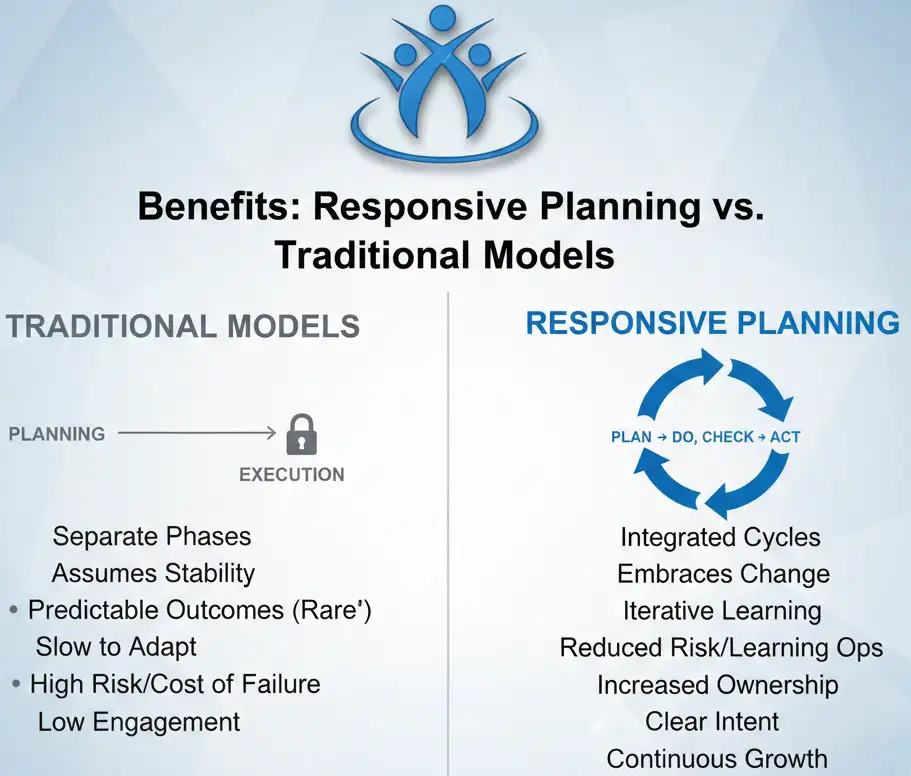
Traditional models often separate planning from execution. They assume stable conditions and predictable outcomes. This assumption rarely holds true today.
The framework offers several advantages.
It responds faster to change. Short cycles reduce risk. Mistakes become learning opportunities instead of failures.
It increases engagement. People feel ownership over decisions. They see how their actions connect to results.
It improves clarity. Clear intent reduces wasted effort. Teams focus on what matters most.
It supports long-term growth. Continuous learning prevents stagnation. Skills stay relevant.
These benefits explain why the approach appeals to modern organizations and individuals alike.
Common Misunderstandings About the Concept
Some people misunderstand the framework at first glance.
One common myth says it lacks structure. In reality, it uses structure to support flexibility. The process guides action without rigid rules.
Another myth claims it slows progress. Reflection may seem like a pause, but it saves time by preventing repeated mistakes.
Some believe it applies only to creative fields. In fact, it works in technical, operational, and strategic contexts.
Others think it replaces planning. It does not. It improves planning by keeping it connected to reality.
Clearing these misunderstandings helps people use the framework more effectively.
Implementing the Framework Step by Step
Adopting this approach does not require a drastic change. Small steps work best.
Start with intent. Define clear goals for a task or project. Write them down.
Next, plan simple actions. Avoid over-planning. Focus on what you can test quickly.
Then act. Execute the plan with attention. Observe results closely.
Review outcomes. Ask what changed and why. Note lessons learned.
Adjust and repeat. Use insights to refine the next cycle.
Over time, this rhythm becomes natural. It turns complex challenges into manageable processes.
Measuring Success Within the System
Success looks different in this framework. It goes beyond metrics alone.
Progress matters. Learning speed matters. Adaptability matters.
Quantitative data still plays a role. Performance indicators track outcomes. Trends reveal patterns.
Qualitative feedback adds depth. Conversations and reflections reveal context. They explain why the results occurred.
Balance matters. Short-term wins should not harm long-term goals. The system encourages sustainable success.
By combining data and insight, people gain a complete view of performance.
Challenges and How to Address Them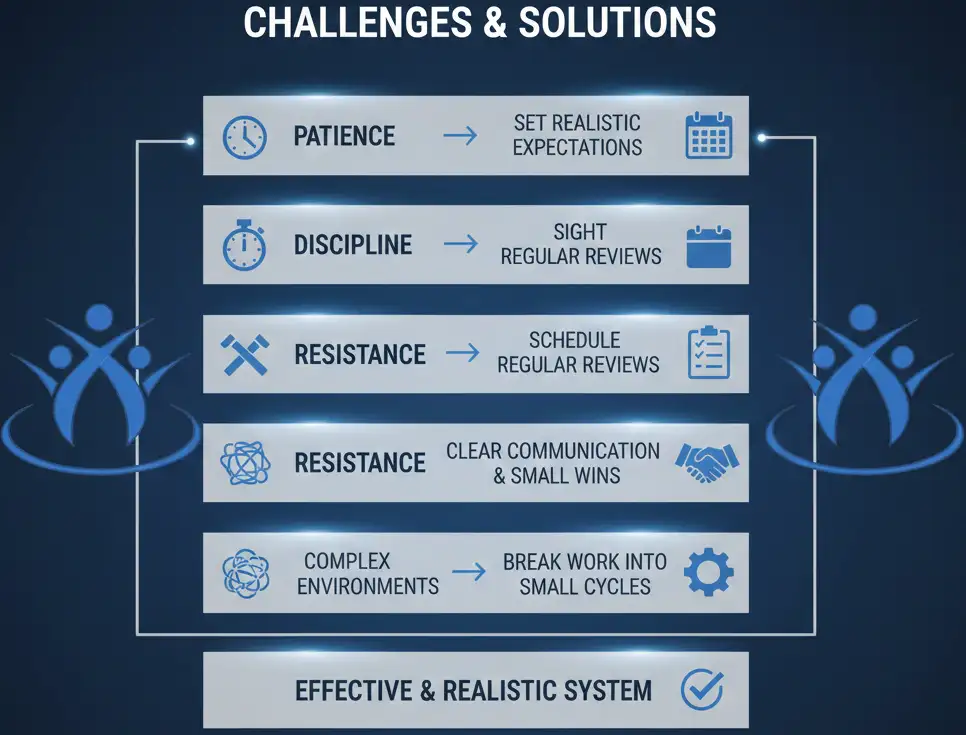
No system works without effort. This framework also faces challenges.
One challenge involves patience. Continuous improvement takes time. People may expect quick results. Setting realistic expectations helps.
Another challenge involves discipline. Reflection requires consistency. Scheduling regular reviews solves this issue.
Resistance can appear in teams. Some prefer familiar methods. Clear communication and small wins build trust.
Complex environments may feel overwhelming. Breaking work into small cycles reduces pressure.
Addressing these challenges keeps the system effective and realistic.
The Role of Culture and Mindset
Culture shapes how well the framework works. Supportive environments encourage learning and adaptation.
Psychological safety matters. People need freedom to experiment and learn from mistakes.
A growth mindset supports progress. Curiosity replaces fear of failure.
Leaders set the tone. Their behavior signals what matters. When leaders reflect and adapt, others follow.
Over time, these cultural factors strengthen the system and its outcomes.
Future Outlook and Relevance
The pace of change continues to increase. Static models struggle under pressure. Adaptive frameworks gain importance.
This approach aligns with modern needs. It supports lifelong learning. It addresses uncertainty and values people as thinkers, not just workers.
As technology evolves, the framework remains relevant. It adapts to tools without depending on them.
The future favors systems that learn. This framework fits that future.
Conclusion
In summary, lamiswisfap represents a practical and forward-looking approach to thinking, learning, and acting in complex environments. It integrates intent, awareness, and execution into a single continuous process. By focusing on clarity, feedback, and adaptability, the framework supports sustainable growth and meaningful progress. Its value lies not in complexity, but in thoughtful simplicity. If you want more information, please visit our website.
Frequently Asked Questions
1. Is this framework suitable for beginners?
Yes. The approach works well for beginners because it relies on simple cycles and clear intent rather than advanced theory.
2. Can this model be used in team settings?
It fits team environments very well. Shared goals and regular reviews improve collaboration and alignment.
3. Does the framework require special tools or software?
No. Simple tools like notes, calendars, and discussions support the process effectively.
4. How long does it take to see results?
Results vary. Many people notice improved clarity and focus within weeks, while deeper benefits appear over time.
5. Can this approach work alongside existing systems?
Yes. It complements many methods by adding reflection and adaptability without replacing current structures.